

Supporting students through exam pressure with awareness, steadiness, and simple daily practices.
| In this article, you’ll find: ✅ Why does fear show up even after preparation? ✅ What science actually confirms about mindfulness ✅ Mindfulness is already present in the Indian school culture ✅ Small practices that support big shifts during exams ✅ Parents’ influence during exam season ✅ Staying steady inside the exam hall |
For 15-year-old Sameera, the corridor felt unusually loud that morning. Shoes scraped against the floor. Locker doors that slammed in a restless rhythm. Every sound pressed in.
She stood by the window, the admit card clenched so tightly her knuckles turned white. Her heart raced. Each breath felt short, unfinished.
“Why does my heart feel like it’s running ahead of me?” she whispered, more puzzled than afraid.
Her teacher noticed the signs – stiff shoulders, rapid breathing, a stillness filled with tension. She walked over quietly, careful not to add to the noise.
“No formulas, no advice,” she said gently. “Breathe with me slowly.”
Sameera hesitated, then followed. In through the nose. Out through the mouth. Again. And again. The tightness in her chest eased. Her shoulders dropped, and her jaw softened.
Her body had mistaken the exam for danger. With calm restored, memory returned and focus settled.
When the bell rang, Sameera walked into the exam hall steady and ready. A quiet mind had prepared her well.
Why does fear show up even after preparation?
Many parents ask the same question every exam season:
“My child studied. Then why this fear?”
But this reaction isn’t just unique to children. Adults experience the very same emotion before presentations, interviews, or an important meeting. The brain doesn’t distinguish between an exam hall or any other moment of perceived pressure.
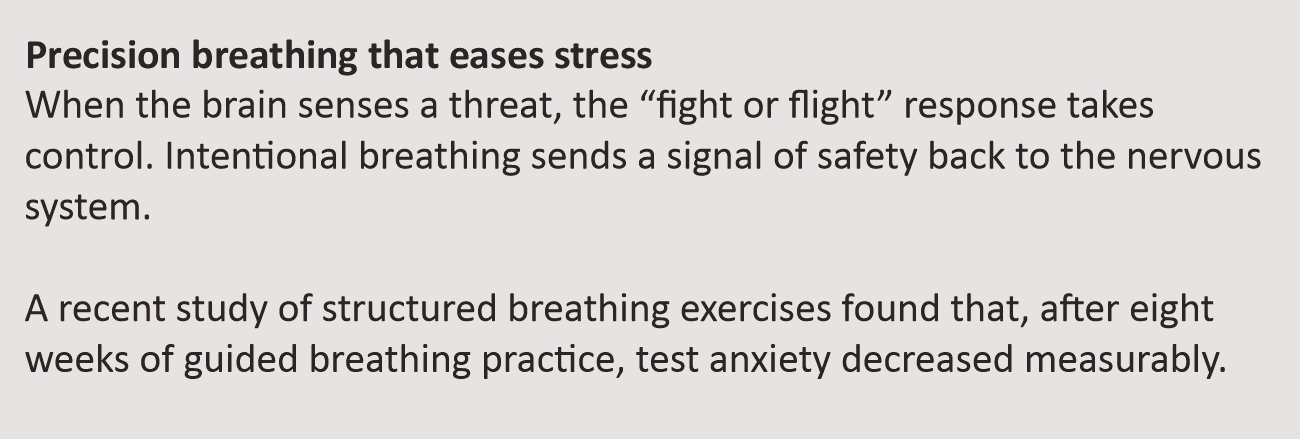
Science offers a clear explanation. Under stress, the brain activates survival meant for physical threats. During the exam season, the body prepares to fight or escape, even though the danger exists only in the mind.
In fact, the 2023 Stress and Anxiety among High School Adolescents article claims that anxiety significantly impairs daily functioning and has been associated with lower school performance.
For students dealing with stress, the struggle often has little to do with ability or effort. The real challenge involves helping the nervous system feel safe enough for learning to surface.
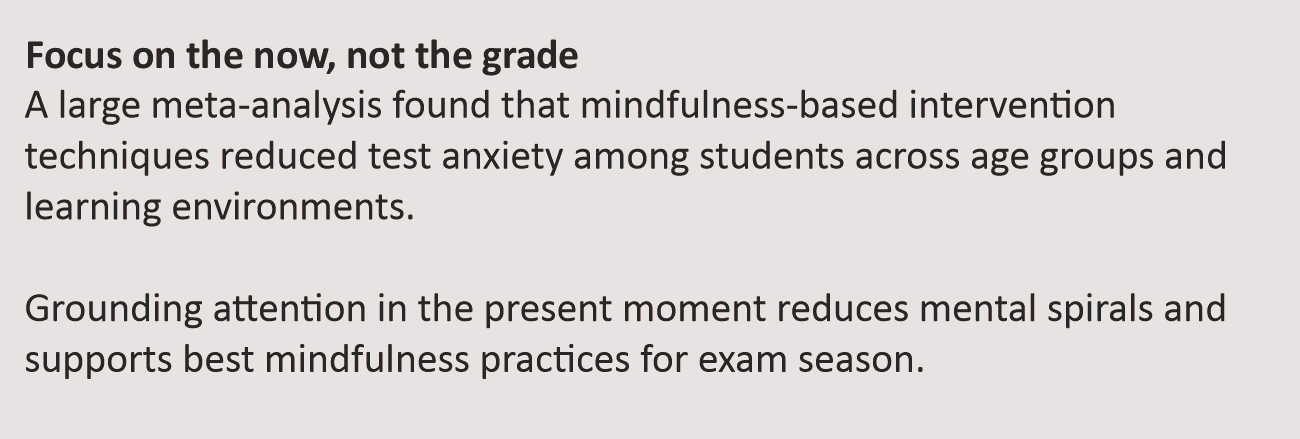
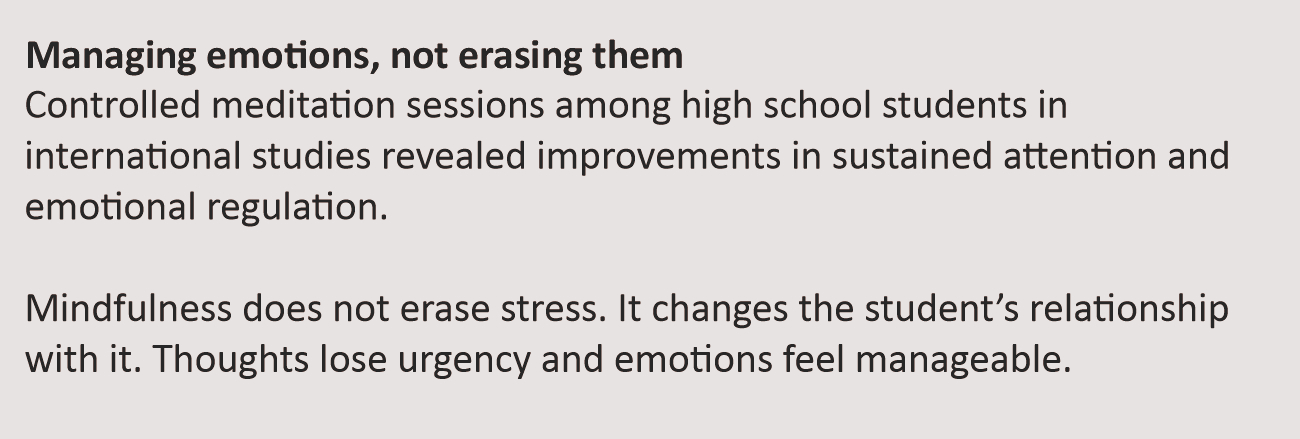
What science actually confirms about mindfulness Mindfulness has drawn consistent attention in academic research for its role in emotional regulation. Over time, studies have shown steady benefits during high-pressure exam situations.
Let’s pause for a moment, shall we?
- Has your child ever gone blank despite knowing the answers?
- Do revision hours stretch longer while progress feels slow?
- Does fear increase as exam dates approach?
Mindfulness is already present in the Indian school culture
Across India, if you look closely, mindfulness exists inside daily school routines. Morning assembly breathing exercises, yoga periods, prayer pauses, or chanting traditions – these practices help students before they begin their school day.
As per the circular released by the Central Board of Secondary Education (CBSE), all affiliated schools will introduce daily positive affirmations during morning assemblies from the 2025-26 academic session to strengthen emotional resilience and focus among students.
Students already understand how to slow down. Stress makes them forget, so gentle cues can bring the awareness back.
Small practices that support big shifts during exams
The most effective strategies feel simple. These practices support study and relaxation techniques for exams without adding burden.
1. Regulating breath during moments of panic
This exercise helps when anxiety spikes all of a sudden.
How to practise:
Sit upright > Place one hand on the abdomen > Inhale gently, noticing the belly expand >
Exhale slowly, letting the belly compress > Repeat for two or three minutes
How it helps: Abdominal breathing activates calming neural pathways, reducing heart rate and easing tension.
According to an article, students have reported that the two-minute breath focus helps them improve their mental wellness during exams.
2. Motivation rooted in awareness, not pressure
While fear drains motivation, avoidance follows suit, and it is this pattern that gets misunderstood as laziness.
Here are some study motivation techniques that ground you in awareness:
- Begin study time with one silent breath.
- Write one achievable goal.
- Stretch arms slowly overhead.
- Listen for any three background sounds.
- Notice the body contact with the chair.
- End study time by naming effort rather than output.
How it helps: Awareness lowers emotional resistance, allowing motivation to rebuild naturally.
3. Sensory anchoring for mental clarity
Instead of focusing on breath, this technique engages the senses.
Practice:
- Name five things visible in the room.
- Name four sounds heard.
- Name three physical sensations.
- Name two scents.
- Name one comforting memory.
How it helps: Sensory input grounds attention outside anxious thought loops, offering reliable study anxiety tips for overwhelmed students.
4. Movement reset for emotional release
Continuous studying at a stretch often builds internal tension. Movement helps release it.
Practice:
- Stand and roll your shoulders backward ten times.
- Gently shake arms for twenty seconds.
- Stretch calves and hamstrings.
- Return to the desk.
How it helps: Physical release supports emotional regulation, improving readiness for learning and supporting study and relaxation techniques for exams.
5. A simple routine for focused studying
Students benefit most from simplicity. Here’s a realistic mindfulness routine for better studying, which looks like this:
- Before study (1 minute): inhale four counts, exhale six counts.
- Midway (2 minutes): roll shoulders backward, release jaw, take three slow breaths.
- After study (1 minute): write one line: “What did I complete today?”
How it works: This routine improves attention, clearly marks transitions, and builds complete awareness.
For beginners, help students introduce simple meditation practices:
- Sit upright.
- Notice natural breath for ten cycles.
- Return attention gently when thoughts drift.
- Resume studying.
Parents’ influence during exam season
As a parent, you always search for better study plans, even though most are already in place. What truly shapes a child’s exam experience is the emotional tone at home. Language, reactions, and unspoken cues matter deeply during this phase.
A simple daily check-in can shift perspectives:
- “What felt difficult today?”
- “What helped, even if a little?”
No fixing. No advice or lectures.
This practise supports students dealing with stress without making evenings feel like assessments. Children sense emotional shifts quickly, and parental anxiety carries across silently. Listening without interruption, avoiding result talk, normalising nerves, and protecting sleep help children build steady emotional control through everyday examples.
Staying steady inside the exam hall
Students benefit from techniques that remain invisible. Here are some focus and concentration tips during critical moments. Press both feet firmly into the floor for five seconds. Release. Repeat twice.
- Press both feet firmly into the floor for five seconds. Release. Repeat twice.
- Let the tongue rest away from the roof of the mouth.
- Take one slow exhale before reading the first question.
Exams test a student’s preparation, memory, and skill, yet they also test their emotional steadiness. When students learn to pause, breathe, and ground themselves, they protect their mental wellness during exams and reclaim their ability to think clearly under pressure. Over time, they strengthen confidence, attention, and resilience, helping focus and concentration tips become lifelong tools that support students through challenges – inside exam halls and far beyond them.