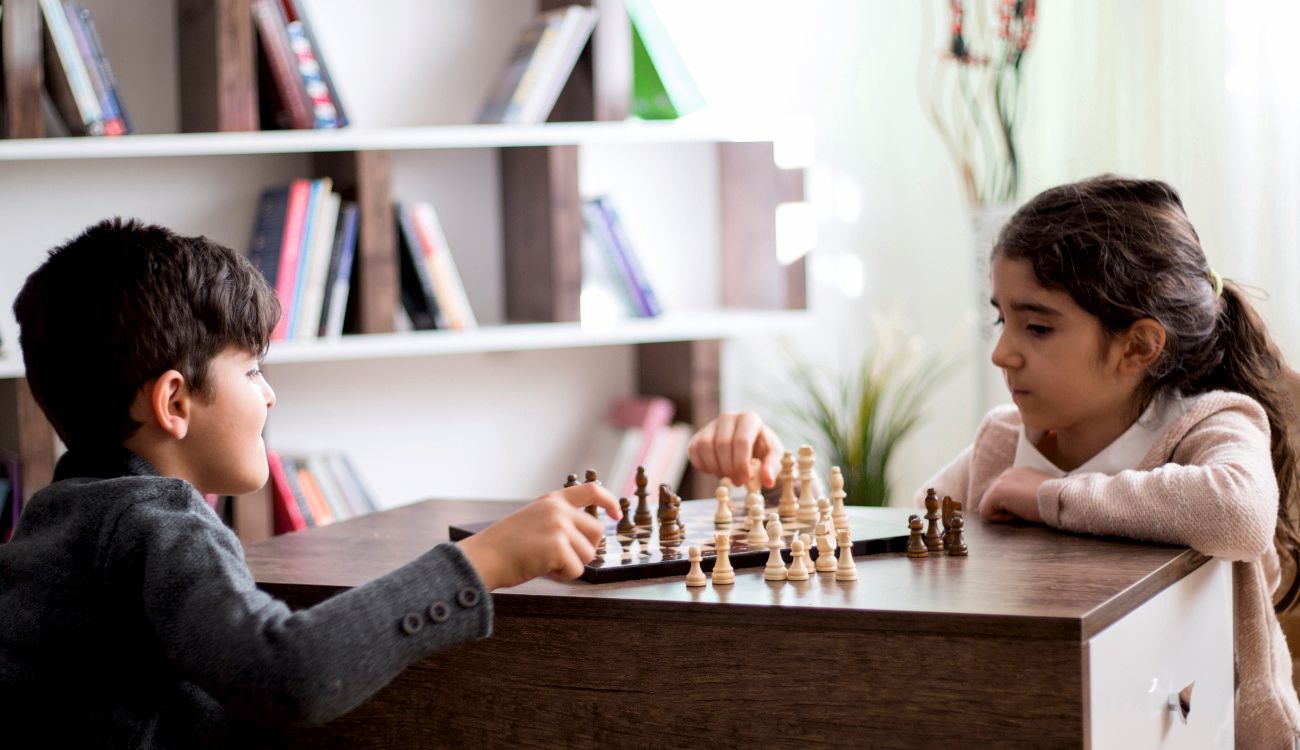

From planning to perseverance, chess cultivates cognitive growth and life-ready skills in young learners.
| In this article, you can explore: ✅ The rise of a thinking culture through chess ✅ Backed by science: What the brain gains from chess ✅ D. Gukesh: A mind trained early ✅ Moves that matter: How chess is powering progress ✅ A Guinness moment: India’s chess record ✅ Inclusivity on the chessboard ✅ Chess and the classroom: Where learning deepens ✅ Skills that students build through chess ✅ 5 ways schools can bring chess to life |
♟ Pawn to d4
♞ Knight to f6
♝ Bishop to g5One board | 32 pieces | Unlimited thinking
Chess is beyond kings and queens; it is cause and effect in motion. It inspires students to analyse patterns, anticipate outcomes, and make thoughtful decisions. In a world that moves fast, chess offers a pause – creating space for clarity, calm reasoning, and critical thinking. Every game becomes a quiet exercise in strategy, patience, and perspective.
The rise of a thinking culture through chess
Can a board game truly become a powerful educational tool and shape the minds of an entire generation?
India, the birthplace of chess, originally called Chaturanga, is witnessing a resurgence in the classroom. From Gujarat’s government schools to private institutions in Bengaluru, chess for education is growing. Teachers and parents alike are realising the educational benefits of chess in helping students think better and feel more confident.
Thought break:
- Can a student anticipate the outcome of their actions three steps ahead?
That’s precisely what chess teaches – anticipation, sequencing, and foresight.
Backed by science: What the brain gains from chess
Chess is a full brain workout that activates both sides of the brain. While the left side handles logic and calculations, the right supports creativity and pattern recognition. Together, this mental balance further promotes chess and brain development.
In fact, according to the Chunks in Chess Memory paper, cognitive scientists estimate that some chess masters hold over 50,000 chunks, or common board patterns, in their memory. That’s how chess improves focus and concentration and sharpens long-term memory.
Moves that matter: How chess is powering progress
In India and around the world, chess has always been a powerful educational tool and continues to be a quiet force for change, strengthening focus and cultivating thoughtful learners.
- Tamil Nadu leads the way: The state will soon be home to an exclusive chess academy, the “Home of Chess”, which will operate under the Sports Development Authority of Tamil Nadu.
- Tripura’s young strategists take centre stage: In July 2022, Tripura hosted a U15 school chess tournament in Agartala, with 150 participants from tribal and rural schools, marking a strong push for chess in early education.
- Victory in the virtual chess arena: In 2019, V.S. Rathanvel won the MPL Chess Mahayudh, India’s largest digital chess tournament, hosted by Mobile Premier League, which drew thousands of players, highlighting the boom in online chess.
- Armenia’s big move in chess: In 2011, Armenia became the first country to make chess a mandatory part of its school curriculum. At the primary level, the goal is to build character and boost decision-making skills from a young age.
Inclusivity on the chessboard
What’s more wonderful about chess is the fact that it transcends physical ability. Since its establishment in 1997, the All India Chess Federation for the Blind (AICFB) has enabled athletes with vision impairment to compete using tactile boards and voice-enabled tools.
One standout champion is Soundarya Kumar Pradhan, a para-athlete from Odisha, who has won multiple medals in major international events, including a silver at the World Junior Championship for the Blind in Poland (2018), gold at the IBCA World Team Championship (2022), and two medals at the Asian Para Games (2023).
For Soundarya and many like him, chess as a learning tool for kids boosts inclusivity and global representation.
Thought break:
- Can a student stay composed when things go off plan?
Chess trains students to adapt without panic and re-evaluate under pressure.
Chess and the classroom: Where learning deepens
Communities across India are embracing chess, which is emerging as a catalyst for transformation. In July 2022, the Government Degree College, Khaltse (Ladakh), organised India’s first college-level chess event on International Chess Day, themed “Women in Chess”.
Meanwhile, the Odisha government is collaborating with FIDE to establish 100 chess centres and a fully funded chess academy, aimed at introducing strategic thinking and chess as a learning tool for kids across urban and rural communities.
VIBGYOR Group of Schools: Shaping young minds through chess
Across campuses, VIBGYOR Group of Schools has consistently recognised the value of chess as part of a well-rounded education. By integrating chess into school culture, we nurture analytical thinking, patience, and mental discipline in students.
VIBGYOR High Gurugram
In April 2025, the school hosted the Gurugram District Chess Championship, drawing enthusiastic participation across age groups. Organised by the District Chess Association, the tournament saw active participation across age groups and created a setting that encouraged strategic play and meaningful engagement. Backed by strong school leadership, the event reinforced the school’s role in promoting chess as a learning tool for kids, blending academics with real-world reasoning skills.
VIBGYOR Rise School, Nashik
On International Chess Day 2025, in collaboration with the Revolutionary Chess Club, the school hosted a large-scale chess tournament on campus. The event reflected the school’s focus on holistic education, combining physical, intellectual, and emotional development. With a modern learning space and an inclusive spirit, the tournament inspired strategic thinking, composure, and leadership in every participant, amplifying the school’s commitment to nurturing cognitive and personal growth.
The efforts of using chess in classrooms build curiosity, discipline, and foresight – encouraging young minds to think not just about moves, but also about meaning. Using chess to improve students’ analytical skills supports both academic and personal growth.
Thought break:
- Does chess teach students to win with grace and lose with perspective?
Chess does both, quietly and consistently.
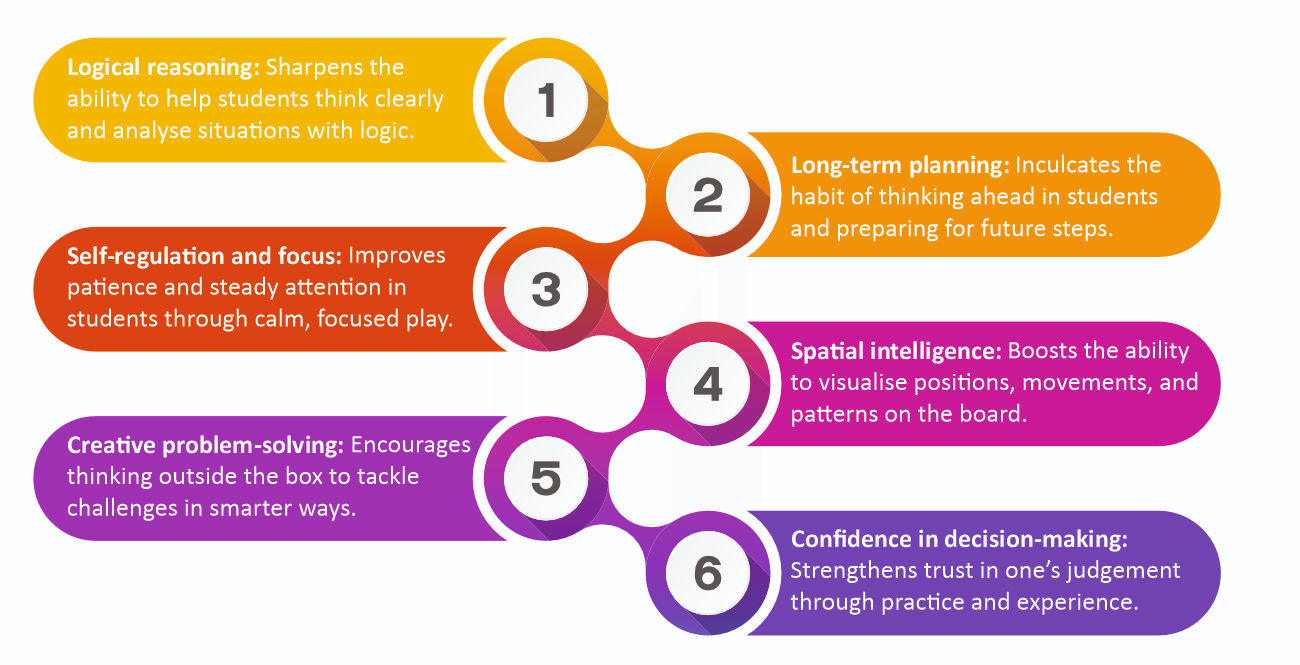
Skills that students build through chess
Chess for students’ mental skills goes beyond strategy and pieces. It nurtures essential abilities that shape sharper thinkers:
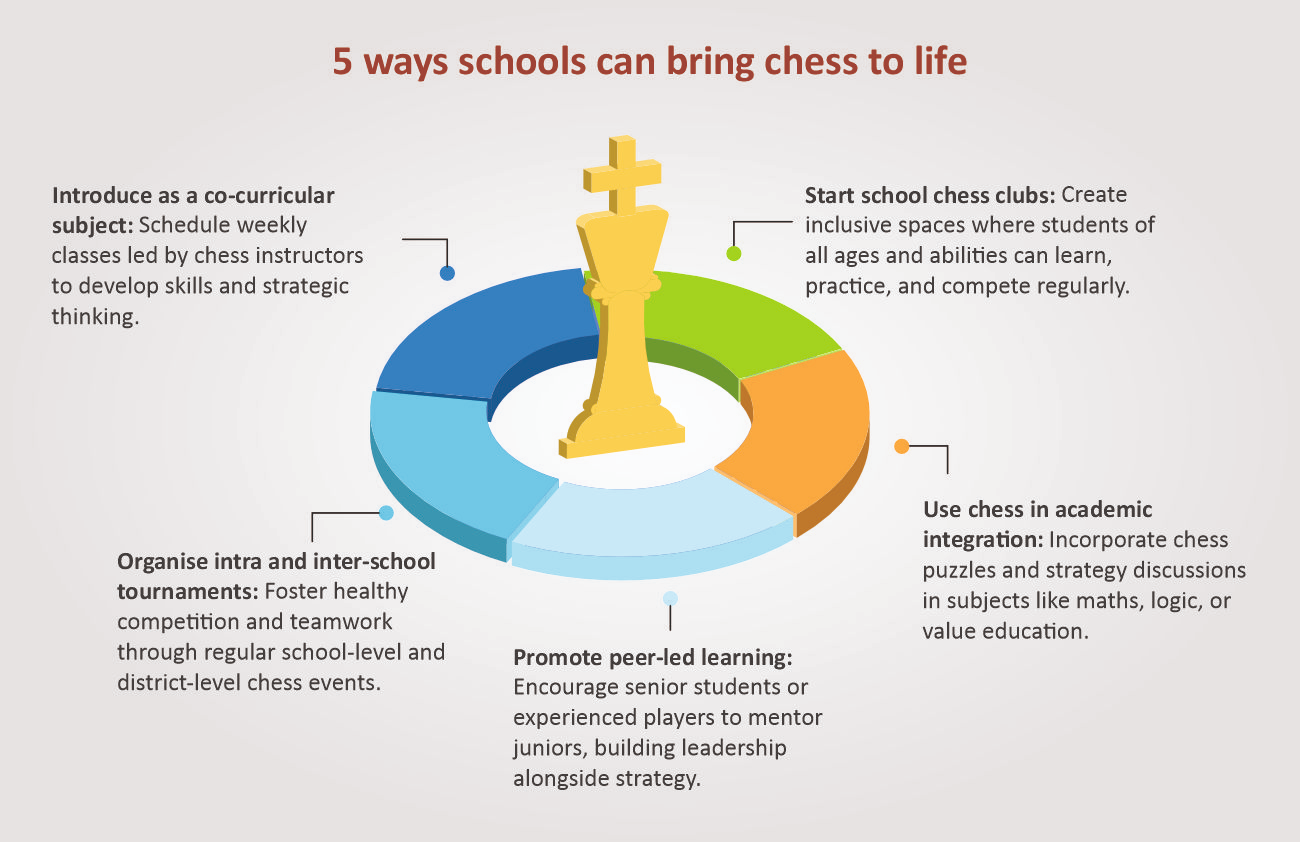
As a parent, you can support the journey by:
- Encouraging chess not for competition, but for cognition.
- Making it part of your child’s routine, just 15 minutes daily.
- Using free, age-appropriate online platforms or joining local clubs.
- Partnering with your school to advocate for using chess in classroom sessions.
- Celebrating small wins, every small step is progress.
Chess for education encourages students to think ahead, stay calm under pressure, and respond with clarity. Its value lies in shaping sharper thinkers, compassionate leaders, and confident decision-makers. As this ancient Indian game finds new meaning in classrooms, communities, and competitions, it becomes a powerful educational tool for lifelong learning. Every move teaches intention, discipline, and reflection. For a generation growing up in a distracted world, chess offers something rare – quiet, focused growth.