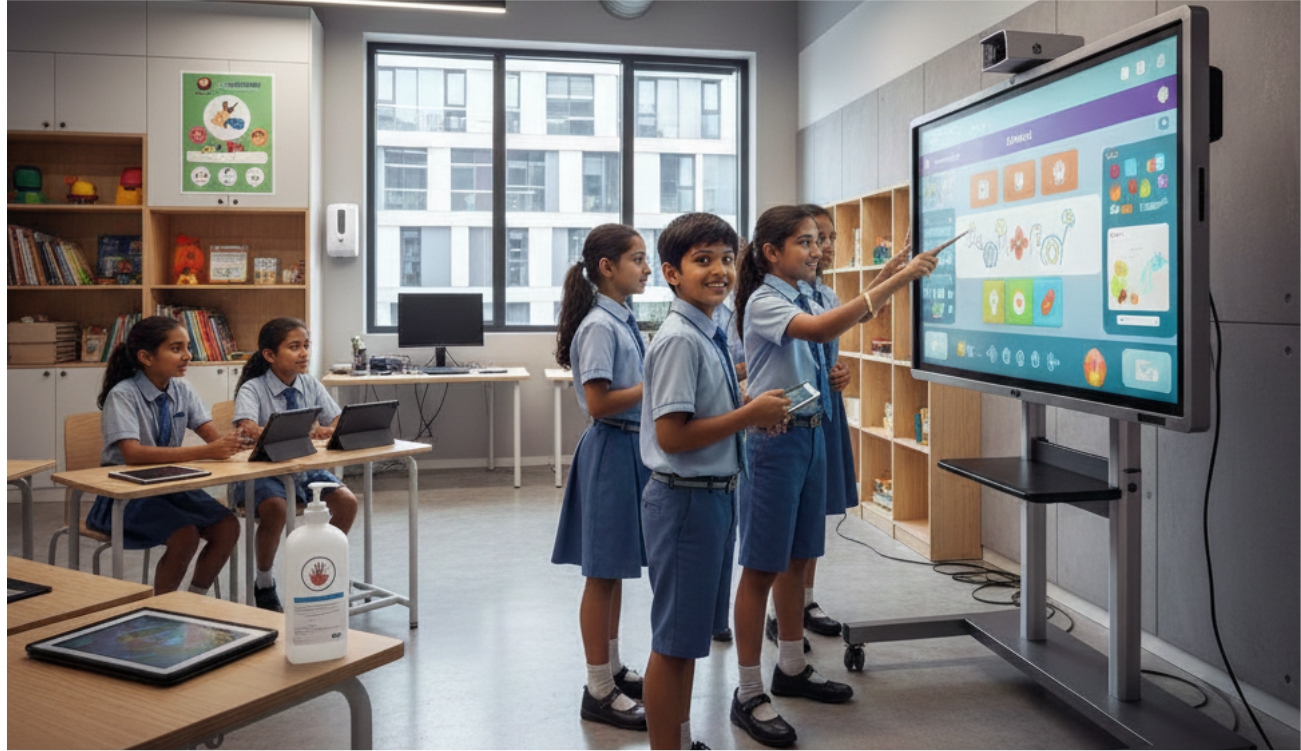

Building modern education infrastructure that inspires focus, fosters trust, and supports every student’s growth.
| In this article, you can discover: ✅ The big reset: What smart really means ✅ A nation rebuilding its classrooms with care ✅ Empowering teachers, engaging minds ✅ Safety is designed, not declared ✅ Lessons worth adapting from the globe ✅ Parents, technology, and the new loop of trust ✅ A practical roadmap that works ✅ When schools feel safe, families breathe easier |
“The government approved 1.46 lakh smart classrooms under the Samagra Shiksha scheme nationwide.”
Behind every upgraded classroom lies a deeper mindset change: walls built to breathe, corridors designed for calm, and tech-based learning that serves a real purpose. Chalkboards have paved the way for smart classroom technology, air sensors now stand beside noticeboards, and the environment supports focus and care. These reflect a cultural shift in how learning spaces are built and utilised.
The big reset: What smart really means
What defines smart education today is finding the right balance between mindful design, steady routines, and digital tools that make learning feel effortless. Global research continues to highlight the same truth.



Future-ready education begins with air, light, and safety before introducing devices or dashboards. Classroom technology upgrades then build upon the foundation, adding value where it is needed most.
A nation rebuilding its classrooms with care
Across India, a quiet transformation is reshaping how schools look, feel, and function. The focus is shifting from temporary updates to creating learning spaces that think about the future.
Under initiatives like PM SHRI and STARS, schools are integrating eco-friendly architecture, digital labs, and real-time data systems such as Vidya Samiksha Kendra to make learning more connected and purposeful.
In Kerala, open-source tools and AI-driven collaboration have empowered teachers and students to learn together. In Delhi, the government’s push for over 18,000 smart classrooms is redefining learning through technology and student-focused design. In contrast, over 10,000 Atal Tinkering Labs enable students to build, test, and innovate more effectively.
These initiatives open doors to new opportunities. Modern learning techniques, such as coding kits, robotics tools, and 3D printing modules, encourage children to move away from rote learning towards hands-on exploration. Platforms such as DIKSHA, ePathshala, and SWAYAM allow teachers to conduct digital lessons in local languages, making classrooms stay inclusive, resourceful, and connected to their communities.
This change is also visible in the way classrooms are built. Spaces breathe better, light is guided to aid focus, and sound is softened to help minds stay present. Every detail adds up to an environment that teaches even before the lesson begins.
- Ventilation first: Fresh air and CO2 sensors keep the mind alert and classrooms healthier.
- Balanced light: Natural daylight and glare control boost focus and concentration.
- Sound control: Good acoustics reduce fatigue and keep lessons engaging.
- Comfortable design: Ergonomic furniture supports posture and easy movement.
- Smart connectivity: Reliable networks with offline backups make classrooms secure learning spaces.
Together, these efforts form connected classrooms that think, care, and grow with every learner.
Empowering teachers, engaging minds
Technology in education is powerful when it amplifies the teacher’s role. Schools are adopting digital platforms that personalise content, simplify assessments, and provide faster feedback.
Adaptive learning tools adjust lessons to each student’s pace. Interactive whiteboards allow real-time collaboration. Virtual reality makes geography, history, and science lessons more engaging and effective. Gamified challenges turn problem-solving into teamwork. Teacher training programmes now include digital literacy and classroom analytics, helping educators guide learning rather than manage screens.
Smart education is more about confidence, enabling teachers to teach with insight and students to learn with independence in future-ready classrooms.
Safety is designed, not declared
A safe school is built through thoughtful planning and steady systems. Structural integrity, clear exits, labelled gas lines, regular drills, and supervised zones form the backbone of daily safety. These reduce risks daily, not only during emergencies.
India’s National School Safety Policy transformed disaster management into a daily process by including safety committees, evacuation drills, and structural audits. Even CBSE has tightened school safety by making CCTV cameras mandatory in classrooms, corridors, and playgrounds.
Yet, proper safety balances vigilance with privacy. A camera records; design prevents. The strongest secure learning spaces rely on trained attention and calm routines rather than constant surveillance.
Lessons worth adapting from the globe


Both examples show that success lies in execution. India already has its frameworks; consistent follow-throughs will define the next leap.
Parents, technology, and the new loop of trust
Today, education is a three-way collaboration between teacher, parent, and the system. Digital learning environments strengthen this bridge when used wisely. Healthy usage looks like this: teachers share early feedback, parents encourage rather than police, and children feel supported, not surveilled.
Transparent communication about data collection, access, and storage ensures comfort. Annual reviews with school committees promote clarity and calm. In connected communities, trust grows when technology stays transparent.
A practical roadmap that works
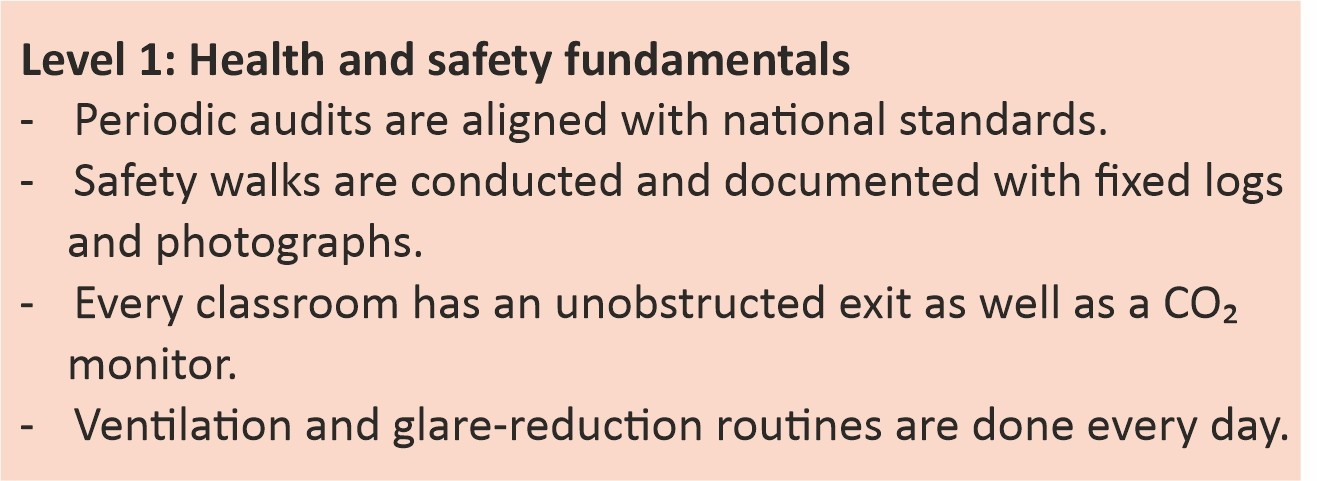
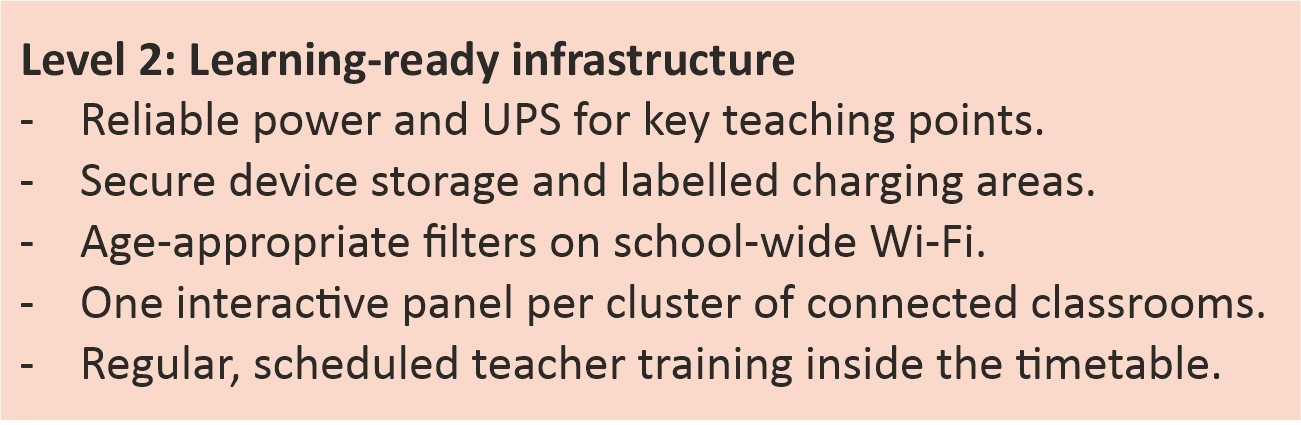
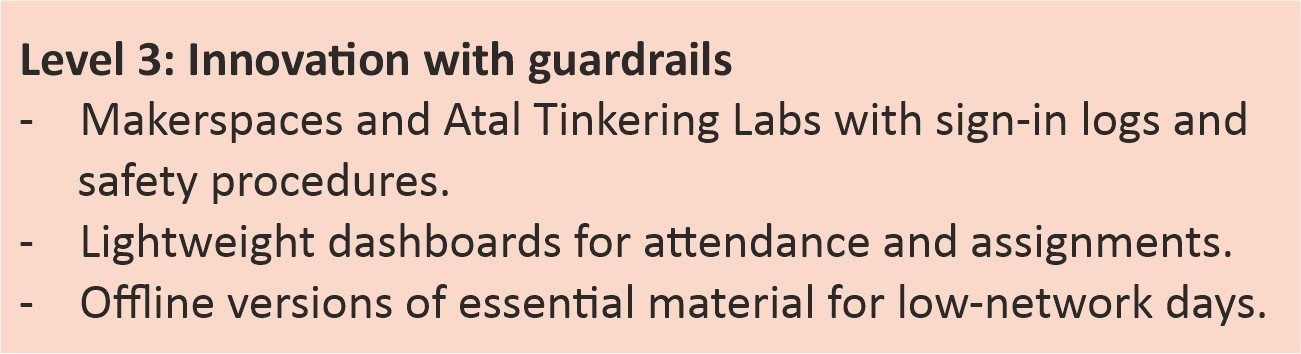
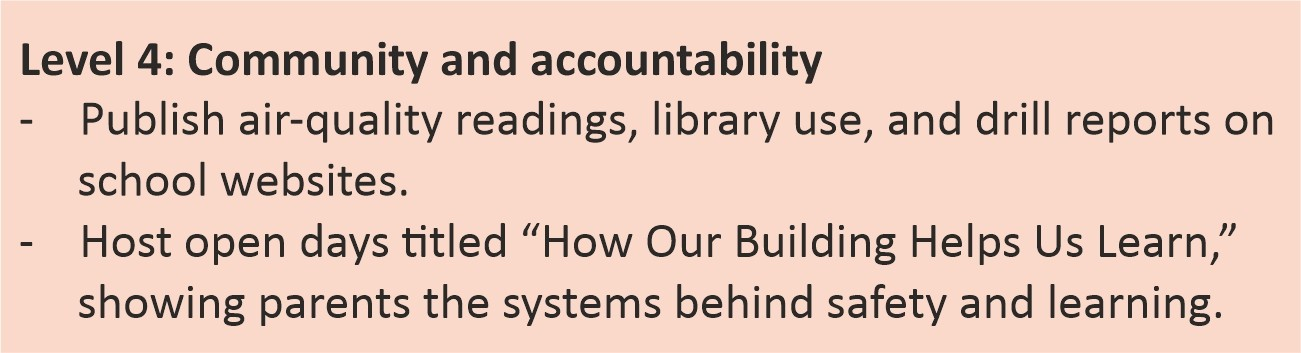
These steps make the infrastructure for modern schools transparent and trustworthy.
When schools feel safe, families breathe easier
Mornings feel lighter when the campus signals care. A well-lit and well-ventilated room helps children focus and settle more quickly. Teachers spend more time guiding their students. Parents receive updates that inform them without causing alarm. Safety drills run smoothly, turning confidence into a habit.
At the next PTA, parents can ask simple, revealing questions:
- How often are interactive classrooms used?
- How much time do teachers get for training each month?
- What steps does the school take to maintain clean air in classrooms?
- When was the last safety drill, and what changes were made afterwards?
Clear answers indicate systems that work, not on paper, but in practice.
India’s modern education infrastructure is entering a phase shaped by discipline, care, and purpose. Its strength depends on consistent upkeep, empowered teachers, and transparent systems built on trust. When these align, future-ready education becomes a shared promise – schools that embody resilience, corridors that carry calm, and classrooms that nurture learning through design, balance, and responsibility. Real progress is measured by the confidence that endures in every space built to help children grow safely and with dignity.