
Helping students navigate career choices through skills, learning, and real-world pathways.
| In this article, you’ll find: ✅ Why planning a career feels different today ✅ What do students actually need right now? ✅ Three pathways that help students build their futures ✅ Learning beyond classrooms: Skill competitions ✅ Rethinking career pathways with clarity ✅ How structured support makes all the difference |
At some point in school, the questions get heavier.
They move beyond marks and exams, and they start being more about life.
“So, what are you planning to do in the future?”
It often starts in school corridors and follows students into family gatherings. Not having an answer can feel unsettling. But uncertainty doesn’t mean you are behind. It means that you are growing up in a world that is continuously evolving.
However, it is worth remembering that futures aren’t built through perfect choices, but through learning, trying, and being supported along the way – a healthier way to approach career planning after high school.
Why planning a career feels different today
A few years ago, career paths felt more predictable. Degrees led to defined roles, and change happened slowly. Planning ahead felt safer. However, today, career paths look more like maps with multiple routes.
Job roles change rapidly because tools and industries shift quickly. A student can begin a degree course and realise that the market has evolved by the time they graduate.
In fact, The Future of Jobs Report 2025 states that employers expect roughly 39% of workers’ core skills to change by 2030, meaning what is valued today may not be the same tomorrow.
As the world of work keeps shifting quickly, it is okay if students don’t have their careers fully figured out, and are still exploring possibilities. The focus should be on building readiness through skills, exposure, and informed decisions.
Pause and ask:
If work keeps changing, what should students build first – certainty or capability?
What do students actually need right now?
Instead of asking students to decide what they want to become, it helps to ask gentler questions that support career guidance for youth, such as:
- What kind of activities do you enjoy, even when they are challenging?
- What skills can you try building in the next few months?
- What experience might help you understand yourself better?
Career planning becomes less frightening when viewed as a series of steps, not a single final decision.
Three pathways that help students build their futures
No two journeys look the same. Students often move between learning, experience, and skill development over time. Understanding these career pathways for students reduces pressure and widens possibilities.
- Focused learning with measurable outcomes
Sometimes, students don’t need long commitments. They need clarity on whether the work interests them and fits their future plans. Structured learning programmes can help students explore areas such as IT support, cybersecurity, digital marketing, and more. Many learners use industry-recognised certification courses to decide whether they want to study further in that field.
For example, Google now offers skill-based learning through Career Certificates, helping learners build confidence as they continue their education.
Such programmes help students answer, “Can I actually do the work?” before they commit long-term.
- Learning by doing: vocational and practical pathways
Many students learn best when they can apply their ideas in real situations. Their understanding grows when learning turns into action. These hands-on learning pathways matter for learners who grow through practice.
In India, vocational and skill-based training are now available even during school years. Students can also explore short-term industry skills courses under the Pradhan Mantri Kaushal Vikas Yojana (PMKVY), where training is built around practical competencies and real job functions. Moreover, the Samagra Shiksha vocational education scheme covers 88 job roles across 22 sectors, including aerospace and aviation, agriculture, and more, combining classroom learning with practical lab work and field exposure.
Globally, this approach is well-established. The 2023 Building Future-Ready Vocational Education and Training Systems report mentions that in countries with apprenticeships, such as Austria, Germany, the Netherlands, and Switzerland, students spend most of their time while in Work-Based Learning (WBL).
This path may not be for everyone. But for many learners, clarity comes faster through hands-on experience.
- Learning through college and higher education
College plays an important role in shaping futures by strengthening subject knowledge, thinking skills, discipline, and credibility – especially for medicine, law, architecture, science, research, and other professional careers. What strengthens this pathway today is proof beyond marks:
- Projects or case studies
- Clubs and competitions that show leadership and problem-solving qualities
- Internships, volunteering, or short field experiences
- Communication skills: writing, presenting, teamwork
A LinkedIn article, Why Employers Value International Internship Experience by the London School of Digital Business, states that employers are looking for stories that stretch beyond the classroom, beyond borders, and sometimes beyond comfort zones.
Education becomes stronger when learning connects to real experiences – clear evidence of what a student can do.
Learning beyond classrooms: Skill competitions
India’s participation in national and international skill competitions offers powerful real-world examples of how skills are applied beyond the classroom. Through platforms such as IndiaSkills, students are identified and trained to represent the country at the WorldSkills Competition.
Participants practise for years, work under pressure, and are judged on precision, safety, and problem-solving. Many winners receive scholarships, advanced training, or recognition.
These platforms highlight success pathways beyond college degrees, proving that learning through skill and practice can lead to real opportunities.
Rethinking career pathways with clarity Career paths today are not limited to a single route. When students understand that there is more than one pathway after school, they approach their choices with more confidence. This mindset supports how students can choose non-traditional career paths with confidence.
- Choose what fits, rather than what’s impressive
– For students: This means choosing a path that suits how you learn, not what sounds impressive to others.
– For parents: It means looking beyond labels and focusing on what fits best for your child.
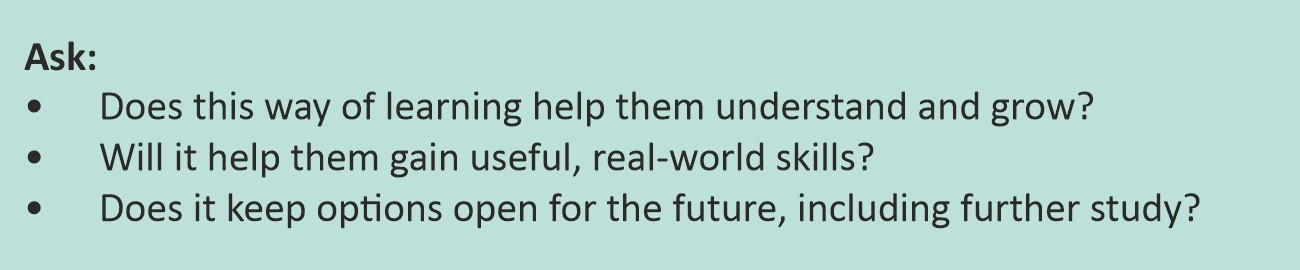
b. Try before making a big commitment
- For students: You don’t need to decide everything right now. You can test an interest first.
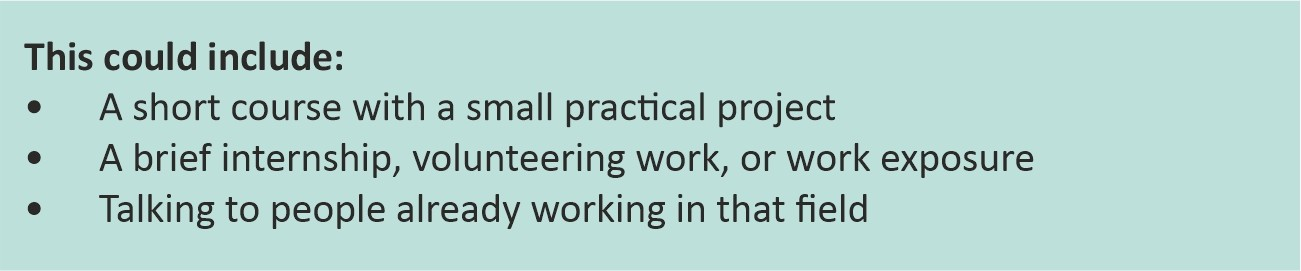
c. Show what you can do, not just what you have studied
- For students: Learning feels more real when you can show your work.
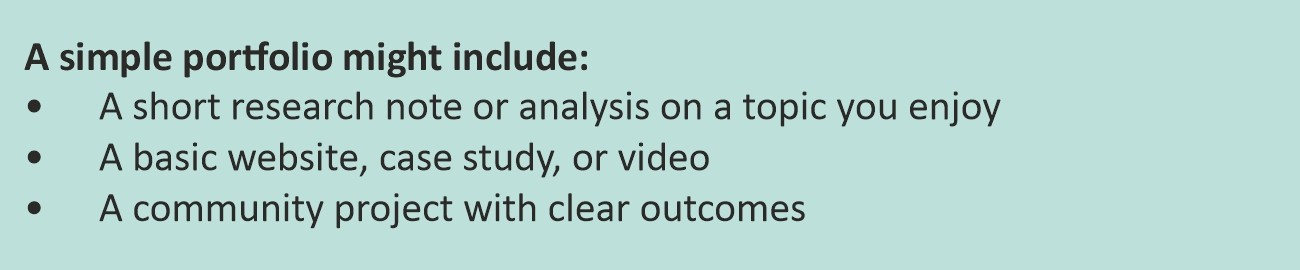
d. Build learning step by step, not all at once
- For families and schools: This means helping students grow in stages, rather than forcing one final choice.
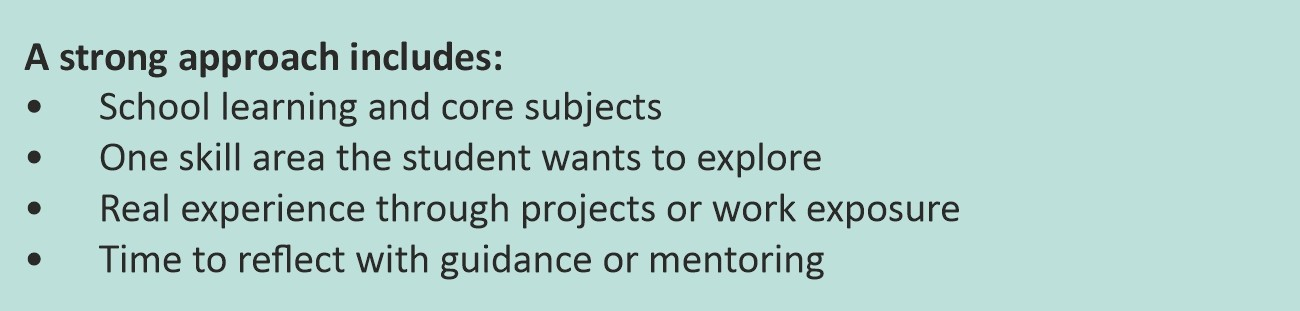
e. Normalise pauses and pivots
Some students will change direction after Class X, some after Class XI, and some after their first year in college. A healthy system gives students permission to adjust, learn, and continue without panic about getting everything right the first time.
How structured support makes all the difference
Many students feel unsure, not because they lack ability, but because conversations around career possibilities often begin too late.
At VIBGYOR Group of Schools, initiatives such as the VIBGYOR Career Counselling Cell (VC3) provide one-to-one guidance, exposure to emerging fields, and conversations about higher education in India and overseas. This strengthens career counselling in schools and helps students connect strengths and interests to real options, without rushing decisions.
David Bowie once said, “I don’t know where I’m going from here, but I promise it won’t be boring.”
This line doesn’t promise success, but it does promise movement. Students don’t need final answers in their teens. They need confidence to try, adjust, and keep learning. Some will follow degrees. Others will build high-paying careers without a college degree. Many will navigate between both. There is no single ladder anymore. There are steps, pauses, and restarts. And that is how futures are built now – through choices, efforts, and career pathways for students shaped by future-ready skills.