What it means to be a learner today – How education has transformed over the last decade

Loading

Over the past decade, education has transformed from rote memorization to cultivating curiosity and critical thinking. Schools now emphasize global awareness, local engagement, and holistic development, integrating arts, sports, and technology. Learning extends beyond the classroom through real-world experiences, fostering adaptability, empathy, and a lifelong love for exploration.

A decade ago, a school day followed a predictable rhythm. Classes were neatly arranged in a timetable, subjects were taught in isolation, sports were tucked into an afternoon slot, and art was reserved for “free periods.” Education was important, but it often felt like a checklist of tasks to complete rather than a journey to experience.

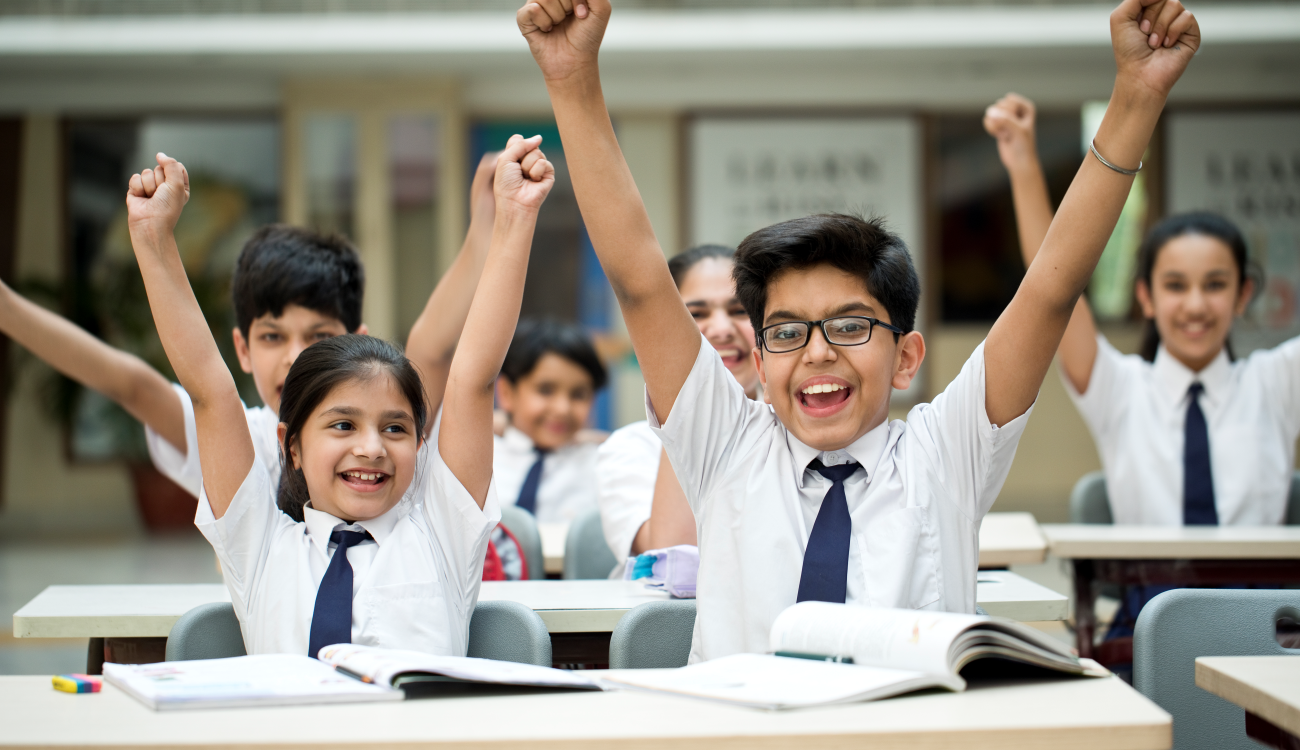
Today, step into a modern classroom and you can feel the shift immediately. The walls seem to breathe with curiosity. A science project can prompt a discussion about climate change. A literature class might spark a theatre performance. The energy on the sports field often flows back into lessons about teamwork and resilience.

To be a learner today is to connect subjects, ideas and experiences in ways that shape not just what you know, but who you are. Over the last decade, education has grown from being a narrow path to success into a wide canvas for personal and collective growth.

In the past, knowledge was something delivered in a fixed sequence, to be absorbed and recalled. Today, it is something to be explored. Students are encouraged to ask questions, connect ideas, and challenge assumptions.

Being a learner now means thinking critically, seeing links between disciplines, and knowing that understanding is built as much through curiosity as through instruction. Modern classrooms foster independent thinking, blending global perspectives with local relevance. A lesson on climate change may inspire a sustainable gardening project in the schoolyard. A literature class may draw parallels between classic novels and current events.

This approach makes learning meaningful and alive qualities that define the learners of today.

Global curriculum with local roots

Schools have embraced curricula that combine rigorous academics with a global outlook. Learners are not only preparing for exams; they are preparing for life in an interconnected world.

Being a learner today means being globally aware yet locally grounded. A science lesson might involve collaborating with students from another country, building cross-cultural communication skills. A geography project could focus on mapping biodiversity in the local neighbourhood, fostering responsibility for one’s community.

This balance provides students with adaptability, empathy, and the ability to confidently navigate both familiar and unfamiliar contexts.

The influence of sports and the arts on shaping learners

One of the most important shifts has been recognising that education does not happen only at a desk. Sports, performing arts, music, and creative pursuits are now seen as essential parts of the learning process, not as extras.

Through sports, students develop resilience, discipline, leadership, and teamwork. Through theatre, dance, or music, they learn empathy, self-expression, and confidence. These experiences bring balance to the demands of academics, blending intellectual growth with creativity and physical wellbeing.

A winning goal on the field or a powerful stage performance is now valued alongside a high exam score because both reflect dedication, skill, and personal growth.

A holistic approach to growth

The most defining change in the last decade has been the shift towards holistic development. Education now seeks to nurture the intellectual, emotional, physical, and social aspects of a student’s life.

Being a learner today means understanding that wellbeing is central to achievement. Mindfulness sessions, peer-support initiatives and accessible counselling create an environment where students can thrive. They are encouraged to reflect on their learning, take ownership of their progress and develop values that extend beyond academics.

When learners feel supported and understood, they become not only better students but also better human beings.

Technology: An open door to the world

Technology has transformed the pace and possibilities of learning. Classrooms are no longer limited by geography. A student can attend a live session with a marine biologist halfway across the globe, or explore historical sites through virtual reality.

Yet, technology isn’t replacing human connection — it’s enhancing it. Teachers remain the anchors, guiding students through the flood of information, helping them think critically, and encouraging them to use digital tools responsibly and creatively.

Beyond the classroom: Learning through experience

Education today values what happens outside traditional lessons just as much as what happens inside. Field trips, community service, internships, and : these experiences encourage responsibility, empathy, and practical skills.

Students might run a school enterprise project, organise a charity fundraiser, or conduct a neighbourhood survey as part of a social science unit. These real-world connections help them see the relevance of what they’re learning and prepare them for life beyond school walls.

The learner of today

To be a learner today is to be an explorer. It’s about balancing the pursuit of knowledge with the development of character, creativity, and compassion.

It’s about understanding that success is not only measured in grades, but in the ability to think independently, work with others, adapt to change, and stay curious.

The last decade has reshaped education into something far richer and more human. It’s not just preparation for the future — it’s an experience that shapes who you are, right now. And perhaps that is the most beautiful transformation of all.
Education 4.0 Framework: Reimagining Learning for the Next Generation

Loading

Skill development is a seed, which when sown, develops strong roots. Children, in particular, benefit immensely from skill development as it shapes their minds and helps them grow into confident, capable individuals.  

Harvard’s Center on the Developing Child explains how skills like focus, awareness, planning, flexibility, and self-control can be instrumental in helping children navigate life’s toughest challenges. 

Yet, studies show that 85% of schools in India haven’t implemented vocational courses as part of their curriculum, showcasing the lack of a robust skilling educational ecosystem.  

Hence, a gap still exists between a child and the skills they need to thrive in life. 

The World Economic Forum’s Education 4.0 framework strives to bridge this gap. Wondering how? The framework emphasises the importance of interpersonal and socio-emotional skills like collaboration, communication, and coordination. It explains how these skills better prepare the next generation to navigate work and life.  

It was designed after detailed consultations with educational experts from schools, non-profits, education ministries, and the private sector. It highlights the abilities, skills, attitudes, and values essential to learning, from early childhood through secondary school, ensuring that children foster a holistic approach to skill development. 

What does this entail for the education sector? 

Standing on the cusp of an era marked by rapid transformations, this framework clearly states the role of educational institutions. It urges schools to encourage young learners to become innovators, problem-solvers, and visionaries who are equipped to excel in the evolving world. 

The mandate for educational institutions is clear: Cultivate a holistic learning approach that imparts concrete skills and fosters interpersonal and societal values that serve as the cornerstone for a lifetime of growth and learning. 

In the face of escalating demands, there is a need for education that transcends traditional paradigms. Hence, this framework underscores that the future of education must inspire children to develop qualities like teamwork, empathy, punctuality, critical thinking, and more, that cannot be replicated or replaced by technology. 

How can the Education 4.0 framework be implemented in schools? 

Divided into broader brackets of content and experiences, this framework presents eight transformations, ensuring that the next-generation learners are academically poised to lead in a complex global landscape.  

Dynamic content for skill adaptation 

Going beyond the classroom, the content bracket focuses on the built-in mechanisms for skill adaptation, which equips young learners with a versatile skill set and a proactive mindset. 

Interpersonal skills Focus on content that delves deeper into interpersonal emotional intelligence – skills like leadership, negotiation, empathy, cooperation, and more. Innovation and creative skills Include content that fosters skills needed to innovate, mainly analytical thinking, system analysis, creativity, and complex problem-solving. 
Global citizenship skills Includes content that focuses on generating awareness about sustainability, playing an active role in the global community, and more. Technology skills Incorporate content based on enhancing a child’s digital knowledge about programming, digital responsibility, and the use of technology. 

Experience-based pedagogies for hands-on learning 

This approach ensures children understand and apply the concepts in various scenarios and contexts, developing personalised learning. This is how schools can implement experiential teachings: 

  • Problem-based and collaborative learning: This type of learning focuses on enhancing peer collaboration that mirrors the future of work. For example, younger students can visit a zoo/planetarium/museum, note down their learnings, and form a group to collaborate and share their observations with the class. Or, they can convene as a group, brainstorm ideas on a particular subject, interview members from that industry, design a business plan, and present impactful solutions in front of their classmates and industry experts. At VIBGYOR Group of Schools, we offer students a unique forum to debate, deliberate, discuss, and resolve international relations-related issues based on the actual policies of the nations they represent through the VIBGYORMUN initiative. 
  • Personalised and self-paced learning: Shifting from a standardised learning system and implementing self-paced learning techniques can boost students’ self-confidence.. Teachers can also conduct one-on-one or mentoring sessions with students to help them progress at their own pace.   For example, using a self-learning tool to build a website or write codes, learning a concept through the help of a favourite cartoon show or sports, etc. competency-based learning can go a long way. At VIBGYOR, we also have a Personalised Learning Centre that offers learning support and counselling services to students. 
  • Lifelong and student-driven learning: A system where children can improve their existing skills and acquire new ones. For example, if they are good at communication and collaboration, they can be encouraged to participate in panel discussions, debates, or give presentations. 
  • Accessible and inclusive learning: This type of learning goes beyond the confines of educational institutions and is accessible to all. One that happens online, giving children the option of learning from anywhere. Adding an inclusive touch to this can be done in the form of one-on-one sessions for students who require it, asking for student feedback, offering captions or subtitles to simplify learning, and more.  

Schools, therefore, play a pivotal role in preparing students to take on the future. By integrating the principles specified in the Education 4.0 framework, educational institutions can bridge the learning gap by not only enhancing academic learning but also nurturing the social and emotional growth of students. It is a bold step towards building an equitable and thriving educational landscape, where the potential of each student is realised. 

“My son doesn’t wear a label, he owns it.”

Loading

When I embarked on this journey of becoming a special educator, it was because of my son. Early on I realised he was slightly different from others, even his own brother. His differences were not so apparent in the early years where academics is not a focus but as soon as he hit grade two and his grades started dropping I figured something was “non normal”. That he needed to be handled differently was evident and once I got on board with who he was instead of who I wanted him to be, I began to set his goals accordingly. Since then I’ve figured out a label for him but it’s never mattered because my son doesn’t wear a label, he owns it.

Children with special needs can be a challenge, there is no debating that. But as with many challenges in life you can ride the wave to fortune or let it drown you at the tide. My learnings have been many as a facilitator for these children and I share them in the hope that life will be made easier for those parents and teachers who are lucky to have them in their lives. Remember always that Life is more meaningful when it poses challenges and pushes our heart and minds to embrace them.

As a mother of one such amazing child, here goes my two bit of learning:

Children are like rainbows… A spectrum with many colours, each with its own hue and beauty. Children with special needs are one of those many colours…. Do not expect red to be yellow.

Do not be afraid to set boundaries because they need them more than others…. The earlier you get started with structure, the more beneficial it is for them.

Stop worrying and start doing what’s best for your child. Figure out the small steps and the big ones will fall in place by and by.

Stop hiding from the world. Differences are good. We are all part of the natural diversity of nature. You don’t make fun of diabetics or think them odd for having the condition. Special need requirements are no different.

Trust that the world will accept your child as soon as you do. Because your acceptance is the first step towards integration. More often than not, what parents perceive as rejection by outsiders is in reality a reflection of their own inner turmoil.

Pretending that special requirements don’t exist is the worst possible harm you can do to your own child. Get on board and start rowing… You’ll be surprised how far your child will get with just your help, forget about others.

Connect with the special needs community and trust me it is a large one… The more dots that are joined, the stronger will be the community support for our kids.

It’s not the easiest of journeys but there is lots of adventure on the way, so look forward to the ride… It might turn out to be the best one you have, with the right attitude.


Top